The Junior Eagles finished 15th in Georgia, but their first-ever World Rugby U20 Championship victory revealed a team that improved throughout the tournament and offered encouraging signs for the future.
By The Rugby Fan Central Team
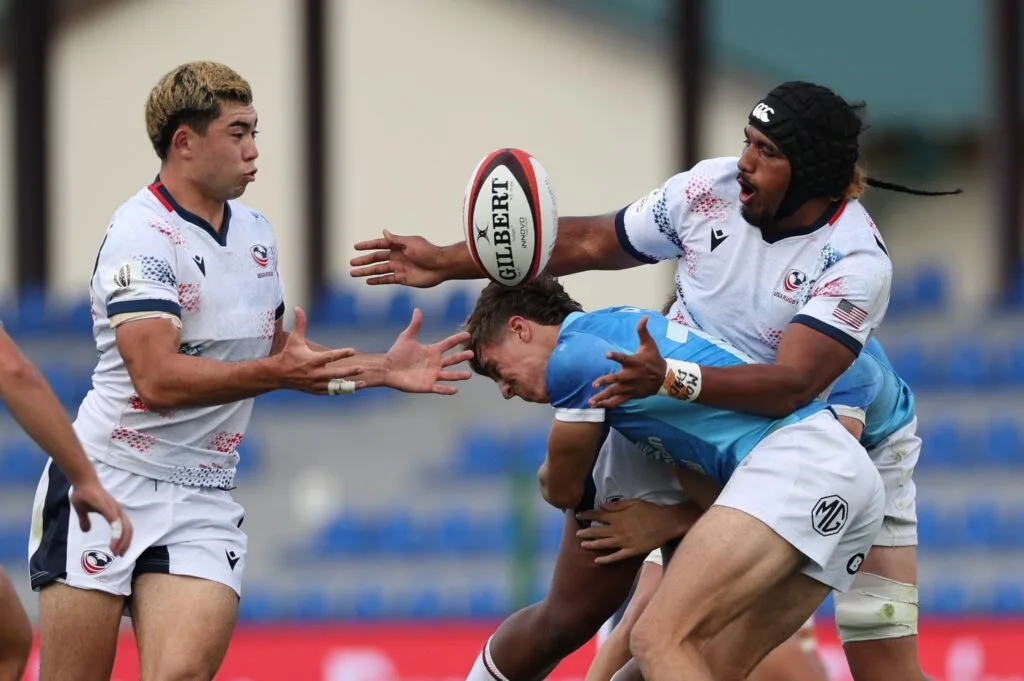
The USA U20 Men’s team celebrates after defeating Uruguay 39-15 to secure the program’s first-ever victory at the World Rugby U20 Championship. Photo: World Rugby.
History will remember the final result.
The USA Men’s U20 team defeated Uruguay 39-15 to secure the program’s first-ever victory at the World Rugby U20 Championship, ending a wait that stretched across 15 matches and two tournament appearances.
The celebrations were fully deserved.
But the scoreline alone doesn’t explain what the Junior Eagles achieved in Georgia.
Across five matches, the Americans faced England, Argentina and Ireland in one of the tournament’s strongest pools, battled illness that disrupted preparation midway through the competition and experienced first-hand the standard required to compete with the world’s leading age-grade nations.
They finished 15th.
More importantly, they left with a clearer understanding of where USA Rugby’s next generation stands—and what still needs to improve.
A Brutal Introduction
There was no gentle introduction for the Junior Eagles.
Pool C featured England, Argentina and Ireland—three nations with established U20 pathways, professional academies and significantly more preparation than the United States.
The results reflected that gap.
Argentina opened with a 78-14 victory before England claimed a 68-40 win in a match that nevertheless highlighted the attacking potential of the American backline. Ireland completed pool play with a 73-22 victory, leaving the USA fourth in the group.
On paper, three heavy defeats.
In reality, each match revealed incremental progress.
The six tries scored against England demonstrated that the USA could create opportunities against elite opposition, while the Ireland match showed noticeable improvement in an area that had caused problems earlier in the tournament—lineout defence.
The results were difficult.
The learning was significant.
Development Doesn’t Always Look Like Success
Age-grade rugby is about more than the final standings.
The USA entered the championship after only a handful of camps and one warm-up fixture. Many players were experiencing rugby at this level for the first time.
Midway through the tournament, illness swept through the squad, forcing late changes to the lineup and disrupting preparation.
Those circumstances do not excuse heavy defeats, but they do provide important context.
Each match exposed a different area requiring improvement.
Against Argentina it was physicality.
Against England it was defensive organization.
Against Ireland it was maintaining accuracy across the full 80 minutes.
Against Japan, discipline and territory again proved costly.
By the final match, many of those lessons had begun to take hold.
Why Uruguay Was Different
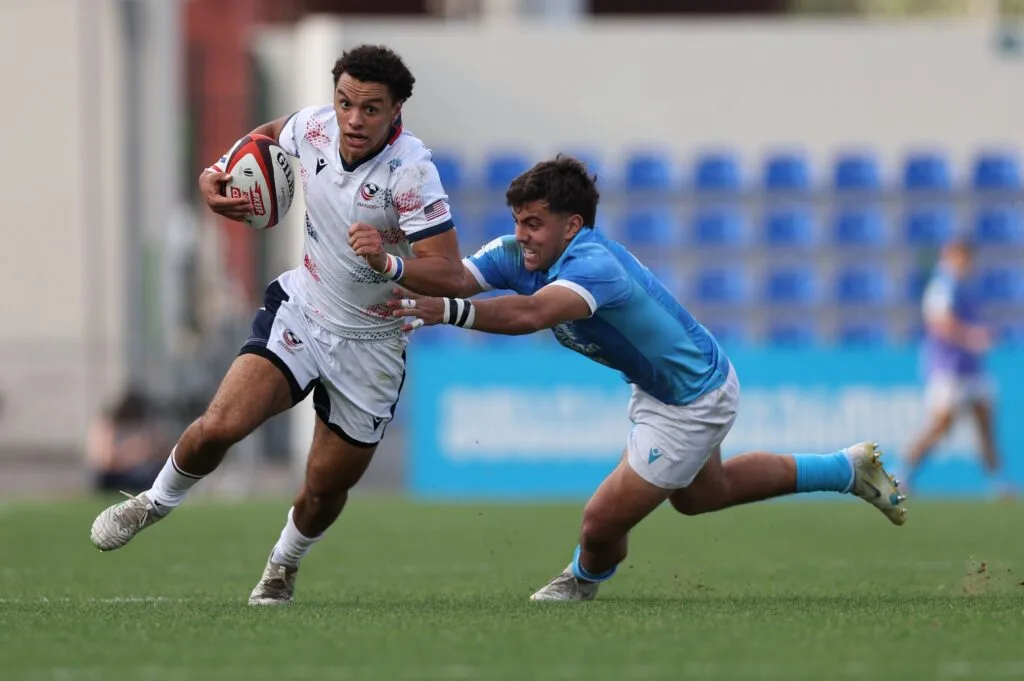
The 39-15 victory over Uruguay was not simply the product of emotion or momentum.
It was the USA’s most complete tactical performance of the tournament.
After conceding three driving-maul tries in the opening half and trailing 15-0, the Junior Eagles made several important adjustments.
First, discipline improved dramatically.
The USA conceded far fewer penalties after halftime, denying Uruguay the attacking lineouts that had generated all three first-half tries.
Second, the breakdown became more secure.
Rather than forcing quick possession, the forwards committed extra numbers to protect the ball, allowing scrum-half Spencer Huntley to distribute from cleaner platforms.
That gave fly-half Declan Cadden and the outside backs more opportunities to attack space instead of receiving pressured ball behind the gain line.
Finally, the kicking strategy became more measured.
Instead of trying to play from deep inside their own half, the USA kicked for territory, forcing Uruguay to build attacks from further away and reducing the pressure on its own defence.
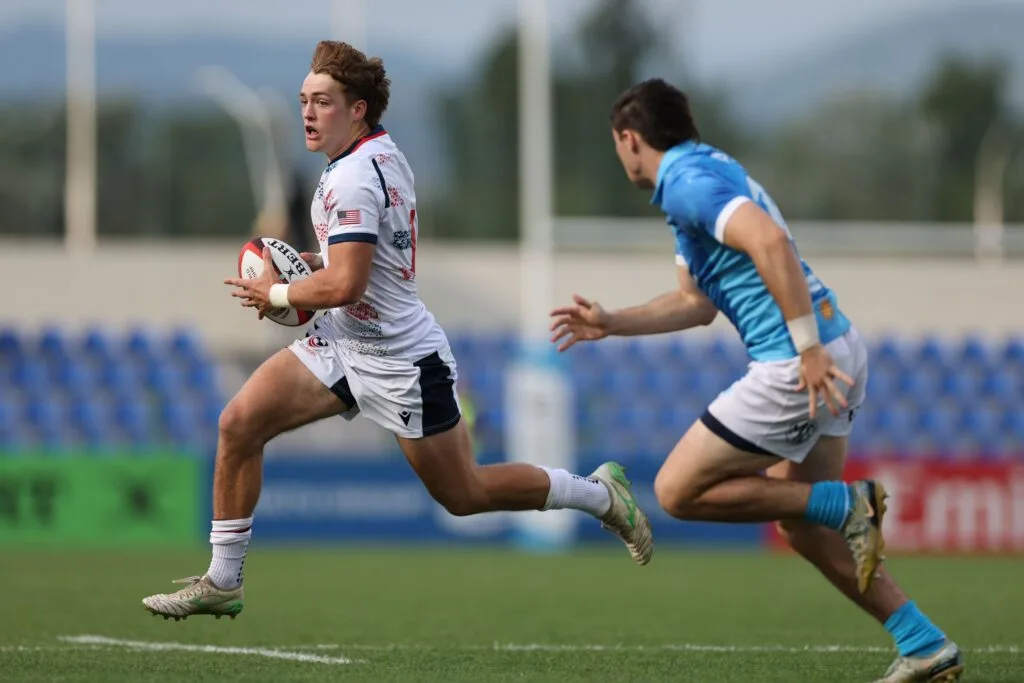
The impact was immediate.
Papaseea Matelau’s powerful second-half try shifted momentum before Harrison Cluff, Oliver Kirk and Liam Hill all crossed as the Junior Eagles scored 39 unanswered points.
The comeback wasn’t accidental.
It was evidence that the squad had learned from the previous four matches.
The Players Who Took A Step Forward
Several players enhanced their reputations during the tournament.
Papaseea Matelau developed into the USA’s most influential forward, combining relentless work at the breakdown with explosive ball carrying. His performance against Uruguay was among the standout individual displays by an American player during the championship.
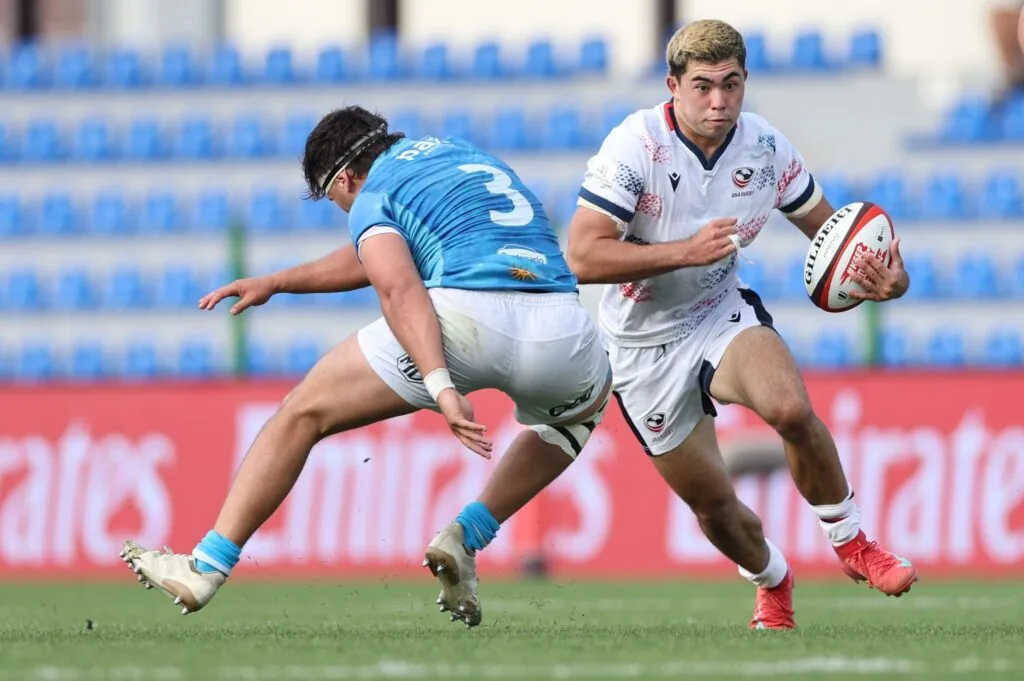
Captain Spencer Huntley controlled the tempo throughout the tournament and provided calm leadership despite difficult circumstances.
Dane Mitchell announced himself on the international stage with four tournament tries, including a hat-trick against England, while Gavin Holder consistently threatened from fullback.
William Darbishire showed composure in midfield, Aidan Stewart grew into the tournament after a difficult opening week, and Frank Finicle’s rapid rise from collegiate rugby to the Junior World Championship illustrated both his potential and the opportunities still available within the American pathway.
Perhaps most encouragingly, very few players looked overwhelmed by the level.
They were punished for mistakes—but they continued to compete.
The Bigger Picture
The tournament also highlighted the structural challenges facing USA Rugby.
England, Argentina and Ireland arrived with players who had spent months competing in professional academy systems and annual age-grade competitions.
The USA assembled its squad through a limited number of camps.
That gap remains significant.
It showed in the set piece, defensive cohesion and the ability to maintain intensity across 80 minutes against elite opposition.
Closing that gap requires more than one encouraging tournament.
It requires more meaningful age-grade fixtures, stronger domestic player development and a clearer pathway from collegiate rugby into Major League Rugby and eventually the senior Eagles program.
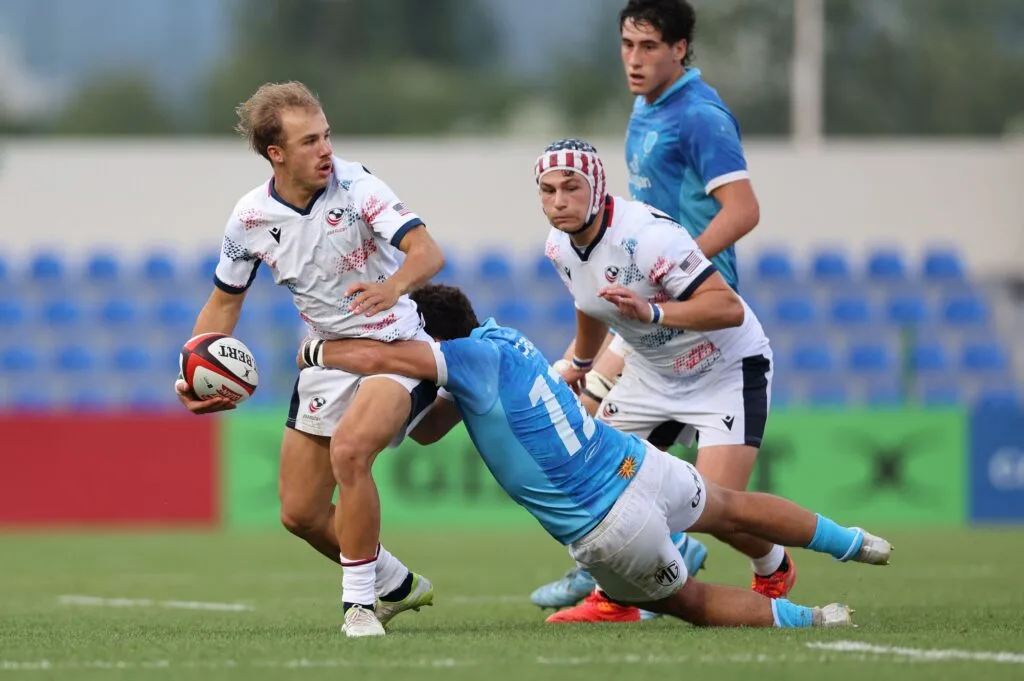
The players demonstrated they are capable of competing.
The system now has to give them more opportunities to do so.
USA U20 Tournament Snapshot
| Match | Result |
|---|---|
| Argentina | Lost 78-14 |
| England | Lost 68-40 |
| Ireland | Lost 73-22 |
| Japan | Lost 71-21 |
| Uruguay | Won 39-15 |
Final Record: 1-4
Final Position: 15th
Points Scored: 136
Tries Scored: 19
Historic Achievement: First-ever World Rugby U20 Championship victory
Three Takeaways
The attack is ahead of the defence
Nineteen tries against elite opposition showed the USA possesses genuine attacking talent. Defensive structure, discipline and territory management remain the larger priorities.
Exposure matters
No training camp can replicate five matches against Argentina, England, Ireland, Japan and Uruguay. The experience gained in Georgia should accelerate the development of this group.
The challenge starts now
A historic victory is an important milestone, but it only becomes meaningful if these players continue progressing. The next few years will determine whether Georgia becomes a defining moment for this generation or simply an encouraging memory.
RFC Verdict
The USA’s first victory at the World Rugby U20 Championship deserves celebration, but it should not obscure the work still to be done.
Across five matches, the Junior Eagles showed genuine attacking quality and clear improvement in areas such as discipline, breakdown accuracy and game management. They also experienced first-hand the physical and tactical standards required to compete with the world’s leading age-grade nations.
The challenge now shifts from the tournament to the pathway that follows it.
If this group continues to receive opportunities through collegiate rugby, Major League Rugby and future USA Rugby programs, Georgia may be remembered as more than the site of a historic first win. It could become the tournament where the next generation of Eagles took an important step forward.
For a young squad that arrived in Georgia seeking experience and departed with a landmark victory, that is meaningful progress—and a foundation on which USA Rugby can continue to build.