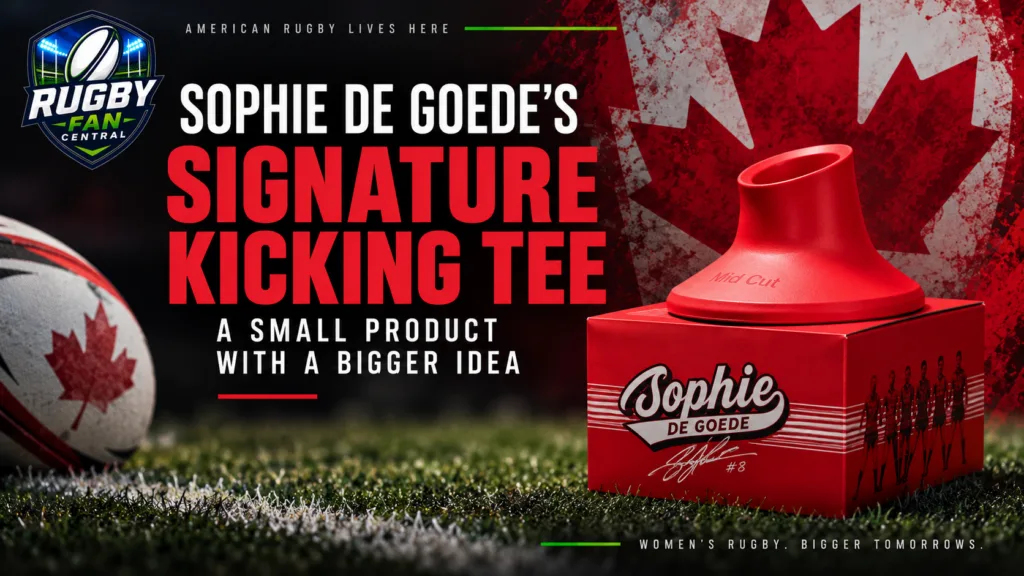
Sophie de Goede has launched a signature kicking tee with Rugby Bricks, borrowing an idea familiar from basketball and applying it to one of rugby’s smallest pieces of equipment. The tee itself is a niche product. The idea behind it could be more significant.
A kicking tee is one of the simplest pieces of equipment in rugby. For Sophie de Goede, it has also become an opportunity to put her name on something distinctly her own.
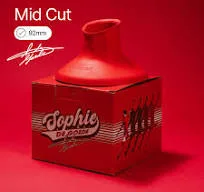
The Canada captain has launched the Sophie de Goede Signature Kicking Tee with Rugby Bricks, a bright red version of the tee she has used for years. Rugby Bricks describes it as a “World First, Signature Kicking Tee” and says de Goede is the first player in men’s or women’s rugby to have both a signature tee and signature color.
That definition of “first” is narrow. Daryl Halligan had the Halligan Supertee in the 1990s, while Dan Carter later had a Supertee bearing his name. Player-associated kicking tees aren’t new.
What’s more interesting is what Rugby Bricks is trying to do differently with de Goede’s.
From signature shoes to a signature tee
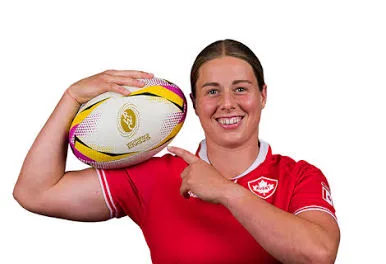
De Goede has explained that the idea reminded her of growing up watching basketball players with their own signature shoes. She never imagined there could be a rugby equivalent.
Rugby Bricks has leaned into that concept. The red color is tied to de Goede’s Canadian identity, the product has player-specific presentation, and the company says she receives a percentage of every tee sold. Rugby Bricks also says de Goede has used its RBVortex Mid Cut design for eight years, so the product is built around equipment she was already using rather than simply putting her name on something new.
It’s an attempt to take the signature-product model familiar elsewhere in professional sports and shrink it down to rugby scale.
And the scale matters.
This isn’t rugby’s Air Jordan
The comparison with signature basketball shoes works as a concept, but commercially the two worlds are barely comparable.
A signature shoe can become a global consumer product worn by millions of people who may never play basketball competitively. A kicking tee has an inherently tiny potential market. It is specialist equipment used by one or perhaps a handful of players on a rugby team, and many rugby supporters will never have a reason to own one.
That limitation is part of what makes de Goede’s tee interesting.
Rugby doesn’t have basketball’s sneaker culture or the enormous commercial ecosystem surrounding individual players. If rugby athletes are going to build signature products, they may initially look less like multimillion-dollar footwear lines and more like this: relatively inexpensive, highly specialized products closely connected to something the player actually does on the field.
For de Goede, that connection is particularly authentic. She isn’t a fly-half or a specialist goal kicker. She’s a No. 8 who also happens to be an elite international kicker, making goal kicking an unusually recognizable part of her game.
Rugby has put players’ names on tees before
The historical precedent goes back decades.
Supertee says New Zealand rugby league international Daryl Halligan worked with inventor Mark Halligan during the 1990s. By 1997, the product was being called the Halligan Supertee, and Daryl subsequently became involved in developing later versions of it.
Former All Blacks fly-half Dan Carter provides another example. Supertee has sold a Carter Rugby Tee, and the company says Carter had a tee named after him before becoming involved with the business in 2018.
Those examples make it difficult to describe de Goede as simply the first rugby player with a kicking tee bearing her name. Rugby Bricks’ more specific claim is that she is the first to have both a signature tee and signature color.
That distinction is worth recording, but it isn’t what makes the product noteworthy.
The commercial model matters more than the color
The more consequential part of the arrangement may be that Rugby Bricks says de Goede receives a percentage of sales.
De Goede has spoken publicly about the financial realities facing Canadian women’s players and the importance of developing income beyond national-team compensation. A signature kicking tee isn’t likely to transform those economics on its own, but it provides another way for an athlete to turn sporting recognition into income.
That matters particularly in women’s rugby, where the rapid growth in attention around leading players has not always been accompanied by comparable commercial opportunities.
Traditionally, a rugby player might appear in advertising for somebody else’s product. The signature model reverses that relationship slightly. The player’s identity becomes part of the reason the product exists and, in de Goede’s case, the player participates directly in its sales.
The sums involved with a specialist kicking tee may ultimately be modest. The more interesting question is whether the model can be repeated.
Could other rugby players do the same?
Not every rugby player has an obvious piece of equipment around which to build a signature product, and kickers have a particular advantage. Their equipment is visible, highly personal and connected to an individual skill that young players can try to imitate.
That gives a Sophie de Goede tee potential appeal beyond established goal kickers. A young player who follows de Goede can use the same style of tee, in her color, in much the same way young basketball players want the shoes worn by their favorite stars.
The comparison stops there in terms of scale, but the emotional connection behind the purchase isn’t entirely different.
That could be especially valuable in women’s rugby. As the game develops more recognizable individual stars, there is an opportunity for players to build identities around particular skills, equipment and personalities rather than relying entirely on the brands of their national teams or clubs.
Whether enough supporters and young players want those products to create a meaningful market remains an open question.
A small test of a bigger idea
There is even a Canadian historical connection to the story. Canadian rugby figure Don Burgess has been credited with developing an early kicking tee, part of the sport’s move away from digging into the turf or using sand to position the ball.
Decades later, Canada’s captain is involved in a very different evolution of the same piece of equipment.
The innovation this time isn’t really the plastic underneath the ball. It’s the business model surrounding it.
The Sophie de Goede Signature Kicking Tee could remain exactly what it appears to be: a clever niche product for kickers and fans of one of Canada’s biggest rugby stars. There is nothing yet to suggest signature kicking tees are about to become a major new source of athlete income.
But that’s what makes the experiment worth following.
Rugby doesn’t need to recreate the signature-shoe business for the underlying idea to matter. If players can turn the skills and equipment that make them recognizable on the field into products they have a financial stake in off it, even small products can create new commercial opportunities.
Whether de Goede’s little red tee becomes a precedent or a one-off remains to be seen. Either way, rugby is experimenting with something other sports learned long ago: sometimes fans aren’t buying only the equipment.
They’re buying a connection to the athlete who uses it.