
Australia Sevens and Wallaroos to Move to Brisbane in Major 2032 Rugby Strategy
By The Rugby Fan Central Team
Australia is moving its men’s and women’s Rugby Sevens programs and the Wallaroos from Sydney to Brisbane as part of a major redevelopment of Ballymore that will reshape the country’s high-performance rugby setup ahead of the 2029 Women’s Rugby World Cup and Brisbane 2032.
Australia is putting Brisbane at the center of a long-term national rugby strategy, with Rugby Australia, the Queensland Rugby Union and the Queensland Government announcing a major new high-performance development at Ballymore.
The Australian Men’s and Women’s Sevens programs and the Wallaroos will be permanently headquartered at the historic Brisbane rugby precinct, while the Wallabies will use Ballymore as their Queensland base.
Up to 90 Rugby Australia athletes and staff are expected to relocate from New South Wales as part of the agreement.
The move goes well beyond changing training grounds.
It connects Australia’s national rugby programs with a major run of home events that includes the 2027 Men’s Rugby World Cup, the 2029 Women’s Rugby World Cup and the Brisbane 2032 Olympic Games.
A New Home for Australian Sevens
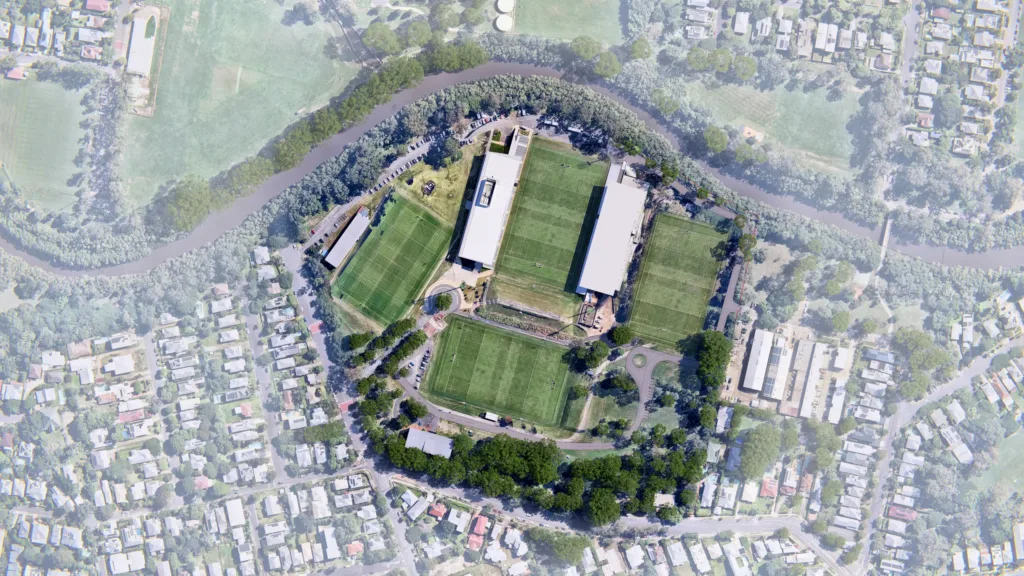
At the center of the redevelopment will be the new Teams In Gold Facility, constructed on the site of Ballymore’s existing Eastern Stand.
Work on the project is scheduled to begin later in 2026.
The purpose-built facility will include a dedicated national-team training pitch, state-of-the-art gymnasium, team rooms and office space, providing a permanent high-performance environment for the Australian Sevens and Wallaroos programs.
The Australian Men’s and Women’s Sevens programs currently operate out of Sydney but will relocate to Brisbane once the new facility is completed.
The timing is significant.
Brisbane will host the Olympic Games in 2032, where Rugby Sevens will again provide Australia with a major medal opportunity.
Rugby Australia CEO Phil Waugh said the move will make the Sevens programs the first Australian Olympic programs to relocate to Brisbane since the city was awarded the 2032 Games.
Australia’s women’s program already has considerable Olympic pedigree, having won the inaugural women’s Rugby Sevens gold medal at Rio 2016.
The move also addresses a practical high-performance issue. Australia’s Sevens programs have not had their own dedicated training field at their current Moore Park base in Sydney.
At Ballymore, that training environment will be built around them.
The Wallaroos Are Part of the Strategy
The move is equally significant for Australia’s women’s XV program.
The Wallaroos will join the Sevens teams at Ballymore as Australia prepares to host the Women’s Rugby World Cup in 2029.
That gives the women’s national program a permanent high-performance base during the build-up to a home World Cup, followed three years later by the Brisbane Olympics.
Ballymore is therefore being positioned as part of a longer-term investment in women’s rugby rather than simply a home for the Sevens programs.
The Wallabies will not permanently relocate to Brisbane under the agreement, but Ballymore will serve as their year-round base whenever the national men’s team is in Queensland.
That gives the precinct a role across Australia’s senior men’s and women’s XVs and Sevens programs.
Ballymore Is Being Rebuilt Around High Performance
The project represents another major stage in the transformation of one of Australian rugby’s historic grounds.
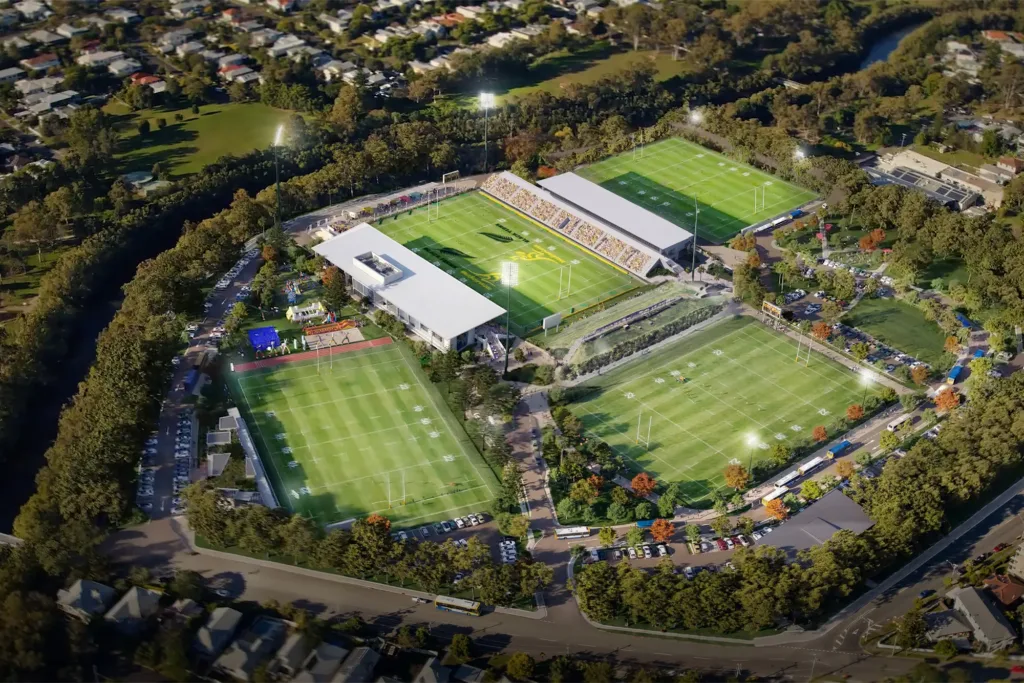
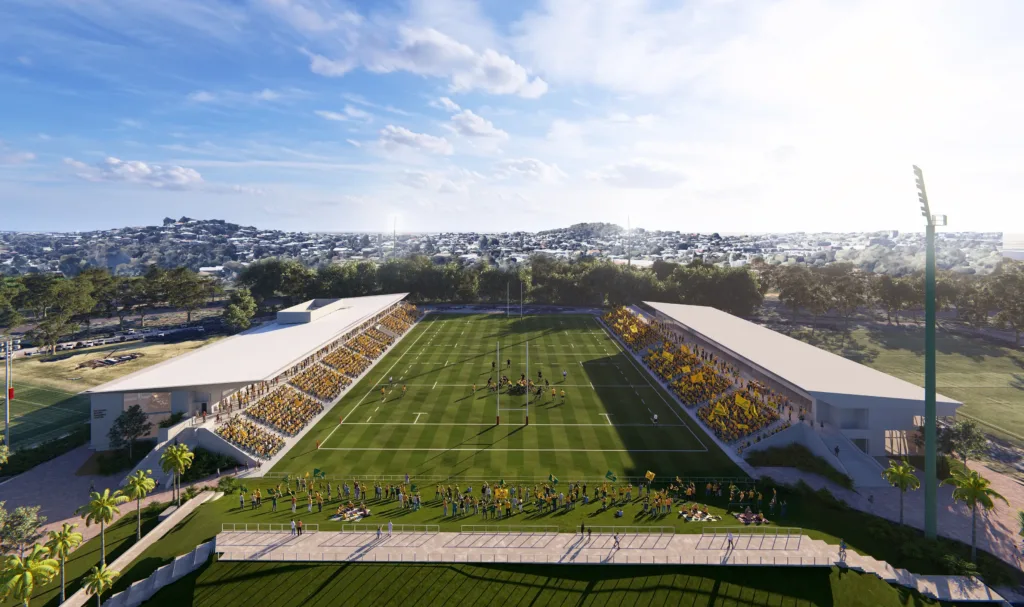
The existing Eastern Stand will be demolished and replaced as part of the Teams In Gold development.
Plans include an integrated 2,400-seat grandstand, a fourth floodlit training field and expanded high-performance facilities.
The project will build on the $31.5 million National Rugby Training Centre and McLean Stand that opened at Ballymore in 2023.
Importantly, the latest development will be delivered through the Queensland Government’s Games Legacy Fund, directly connecting investment associated with Brisbane 2032 to permanent rugby infrastructure.
Instead of attempting to turn Ballymore into another large international stadium, the redevelopment is increasingly positioning the precinct as a place where Australian rugby operates every day.
Training.
Recovery.
Coaching.
Administration.
Athlete development.
National-team preparation.
That distinction is important to understanding the strategy.
Queensland’s Rugby Deal Goes Beyond Ballymore
The relocation forms part of a much larger agreement between Rugby Australia and the Queensland Government.
Queensland has secured Bledisloe Cup Tests between the Wallabies and New Zealand on ANZAC Day in 2027, 2029 and 2031.
The state will also host 10 matches during the 2027 Men’s Rugby World Cup, bringing another major wave of international rugby to Queensland before Australia hosts the Women’s Rugby World Cup two years later.
The Rugby Australia Awards, including the John Eales Medal, will also be staged in Queensland twice during the next seven years.
And the agreement extends beyond matches and awards.
Queensland is also set to host the Rugby Australia Summit, an Oceania/World Rugby Summit and a SANZAAR Board Meeting, adding rugby administration and international decision-making events to the state’s growing rugby calendar.
Taken together, the agreement means Queensland isn’t simply receiving a new training facility.
It is securing national teams, athletes, staff, major matches and rugby administration during one of the most important periods Australian rugby has faced in decades.
The strategy effectively links infrastructure investment with an extended calendar of major events.
The Broader Blueprint
The significance of the Ballymore project extends beyond Australia.
Hosting a Rugby World Cup or Olympic Games can create enormous attention and commercial opportunity, but the lasting value depends partly on what remains after the event has finished.
Australia is attempting to connect those major events with something permanent.
The Ballymore investment combines national-team facilities, athlete relocation and high-performance infrastructure with a wider agreement that brings major international rugby to Queensland over several years.
Rather than treating each tournament or Test as an isolated event, Queensland and Rugby Australia are building a longer-term rugby footprint around them.
There are potential commercial benefits as well.
Concentrating multiple national programs in one high-performance environment can create greater sponsor visibility, simplify media access and allow teams to share facilities, expertise and athlete-development resources.
And then there is the international comparison.
The United States is approaching a remarkably similar window of opportunity.
Los Angeles hosts the Olympics in 2028.
The United States then hosts the Men’s Rugby World Cup in 2031 and Women’s Rugby World Cup in 2033.
Those events will create unprecedented opportunities for American rugby, but hosting them alone does not guarantee a lasting transformation of the sport.
Australia’s approach provides one possible blueprint: use major events to support permanent infrastructure, high-performance environments and multi-year partnerships that remain after the crowds have gone home.
For American rugby, that raises a larger question:
What permanent high-performance infrastructure, development systems and institutional capacity will be built around LA28 and the 2031 and 2033 Rugby World Cups?
That may ultimately matter as much as what happens during the tournaments themselves.
The Strategy Also Carries Challenges
Yet turning this vision into reality requires navigating challenges at home.
Up to 90 Rugby Australia athletes and staff are expected to relocate from New South Wales.
Moving that many people represents a significant organizational change, particularly with Sydney remaining one of Australian rugby’s major player, commercial and participation markets.
For individual athletes and staff, relocation can also mean moving homes, families and established support networks.
Rugby Australia will therefore need to balance the advantages of concentrating its high-performance programs at Ballymore with maintaining strong connections to rugby pathways elsewhere in the country.
There is also an important distinction between Ballymore’s role as a high-performance center and Australia’s need for much larger venues for its biggest international matches.
Ballymore can host selected rugby events, but major Wallabies Tests and the largest Rugby World Cup fixtures require significantly greater capacity.
That is not necessarily a weakness in the strategy.
It may actually illustrate its logic.
Ballymore does not need to become Australia’s biggest rugby stadium.
It needs to become one of its most important rugby workplaces.
A Long-Term Bet on Brisbane
Ballymore has been associated with Queensland rugby for generations.
Its next chapter will increasingly be connected with Australian national rugby as well.
The relocation of the Sevens programs and Wallaroos means Brisbane will become the permanent home of three national programs while providing a Queensland base for the Wallabies.
For Rugby Australia, the opportunity is larger than any one tournament.
Australia will host the Men’s Rugby World Cup in 2027, the Women’s Rugby World Cup in 2029 and the Olympic Games in Brisbane in 2032.
Those events will come and go.
The facilities, systems and high-performance environment created around them can remain.
If Rugby Australia can combine that permanent infrastructure with the sporting and commercial opportunities generated by one of the biggest event cycles in Australian rugby history, Ballymore’s significance could extend well beyond the redevelopment of a single historic ground.
It could become an example of what building a legacy before the major events arrive actually looks like.