
A recent Rugby World Magazine article explored a question that has followed the sport for decades: Can rugby union finally establish a lasting foothold in the United States ahead of the 2031 Rugby World Cup?
It’s a question that matters not only for American rugby but for the future of the global game. With the United States set to host the Men’s Rugby World Cup in 2031 and the Women’s Rugby World Cup in 2033, World Rugby is making one of the biggest strategic investments in the sport’s history.
The Rugby World article presents a compelling case for optimism, highlighting the commercial potential of the American market and the opportunities these tournaments could create. We agree with much of that assessment. However, the discussion also raises important questions about what success should realistically look like and how rugby can turn major events into lasting growth.
The Opportunity Is Real

The attraction of the United States is obvious.
America remains the world’s largest sports market, offering enormous opportunities for television audiences, sponsorships, partnerships, and commercial growth. Even a modest increase in rugby’s popularity could have a significant impact on the sport globally.
More importantly, rugby is not starting from scratch.
At the grassroots level, USA Youth and High School Rugby surpassed 50,000 registrations in 2024, representing a 12% increase from the previous year.
The professional game is also showing signs of progress. Major League Rugby reported more than 25% year-over-year growth in viewership, while attendance across the league continued to rise.
The momentum extends beyond the United States. The 2025 Women’s Rugby World Cup shattered records, selling more than 444,000 tickets, attracting nearly 82,000 fans to the final, and generating 147 million global viewing hours.
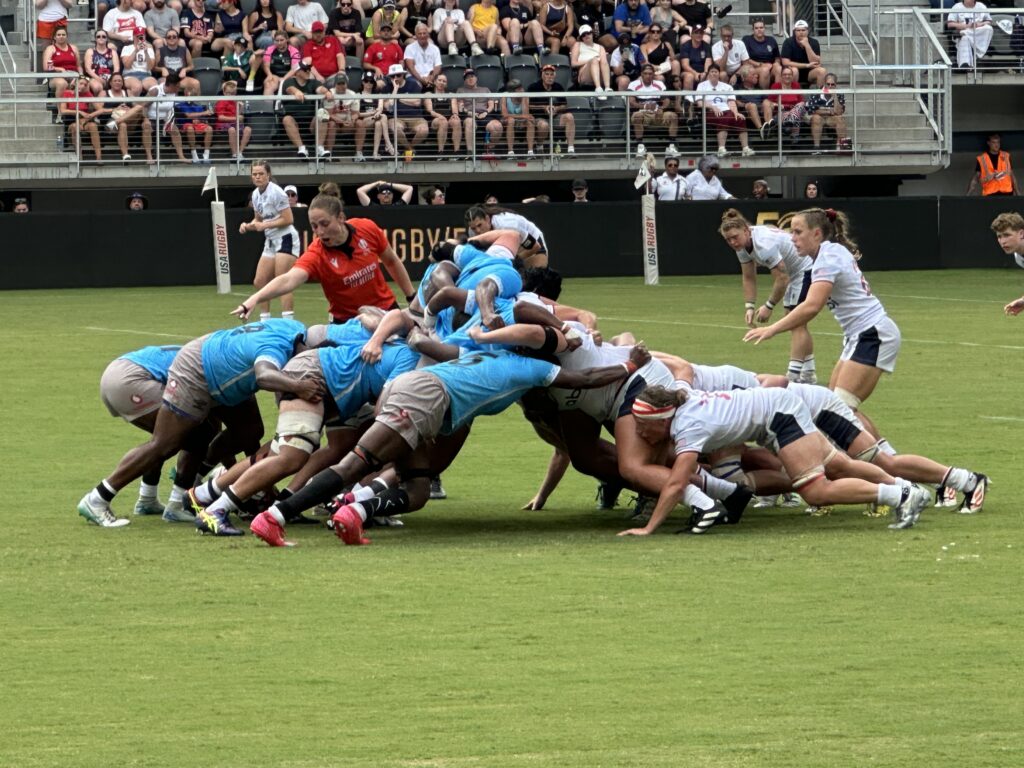
As someone who attended matches throughout the tournament—from pool play through the quarterfinals, semifinals, bronze medal match, and final—I witnessed that momentum firsthand. Week after week, stadiums were filled with passionate supporters, creating an atmosphere that demonstrated just how far the women’s game has come and how much potential remains for future growth.
Those numbers suggest rugby is entering the next decade with genuine momentum rather than relying solely on optimism.
The United States also benefits from a diverse population with strong ties to traditional rugby nations, creating a foundation that many emerging rugby markets do not possess. From a strategic perspective, World Rugby’s decision to award both the 2031 Men’s Rugby World Cup and the 2033 Women’s Rugby World Cup to the United States makes sense.
The Challenge Is Bigger Than Many Realize
At the same time, rugby’s supporters should be careful not to confuse momentum with inevitability.
One reality that deserves greater attention is that the American sports market is not simply crowded—it is fragmented.
Rugby is not competing only against the NFL, NBA, MLB, NHL, and MLS. It is competing against college sports, youth sports, esports, streaming platforms, social media, and countless entertainment options that compete for consumers’ time and attention every day.
The encouraging signs are real, but they remain small compared with the scale of the American sports landscape.
That means hosting a World Cup alone will not guarantee lasting success.
Awareness is important, but awareness does not automatically create lifelong fans. Sustainable growth requires investment in grassroots programs, player development pathways, coaching education, media exposure, and strong local clubs that can retain new participants after the spotlight fades.
The World Cup can open the door, but rugby still has to walk through it.
Why the Women’s Rugby World Cup Matters
Much of the conversation surrounding rugby’s future in America naturally focuses on the men’s tournament in 2031. However, the Women’s Rugby World Cup in 2033 could prove just as important.
The women’s game is experiencing remarkable growth around the world, and the United States is particularly well-positioned to benefit from that momentum.
The success of the USA Women’s Sevens team, increased media coverage, growing participation at youth and collegiate levels, and record-breaking global interest in women’s rugby have helped introduce the sport to entirely new audiences.
Hosting both tournaments creates a rare opportunity to build momentum across an entire decade rather than relying on a single event. Together, the 2031 and 2033 World Cups have the potential to inspire a new generation of players, coaches, officials, and supporters.
For rugby in America, success should not be measured by one tournament. It should be measured by what remains after both tournaments have been played.
What Success Should Actually Look Like
Perhaps the biggest mistake rugby could make is measuring success by whether it becomes one of America’s major sports.
That is neither realistic nor necessary.
Rugby does not need to challenge football, basketball, baseball, or soccer to justify the investment being made. Success should instead be measured through sustainable growth.
If the World Cups help create stronger youth participation, more visible men’s and women’s competitions, improved national team performances, larger fan communities, and a more stable professional environment, then they will have achieved something meaningful.
Sports rarely transform overnight. Growth is usually gradual, built through years of consistent exposure and development.
Rugby’s Long Game
The Rugby World article is right to identify the United States as rugby’s greatest growth opportunity. But opportunity alone does not guarantee success.
The real test will not be whether the 2031 Men’s Rugby World Cup or the 2033 Women’s Rugby World Cup generates headlines. It will be whether those tournaments leave behind stronger clubs, better development pathways, sustainable professional structures, and a larger community of players and supporters.

The World Cups will not make rugby a mainstream American sport overnight. But if they provide the infrastructure, visibility, and fan base needed for long-term growth, they may achieve something even more important: establishing rugby as a permanent part of the American sporting landscape.
Source inspiration: Rugby World Magazine’s article, “Can Rugby Union Break the USA? We Look at World Rugby’s Attempt to Break America Ahead of the 2031 World Cup.”