
Why the Quinnipiac Rugby Lawsuit Matters Beyond One Program
by the Rugby Fan Central Team
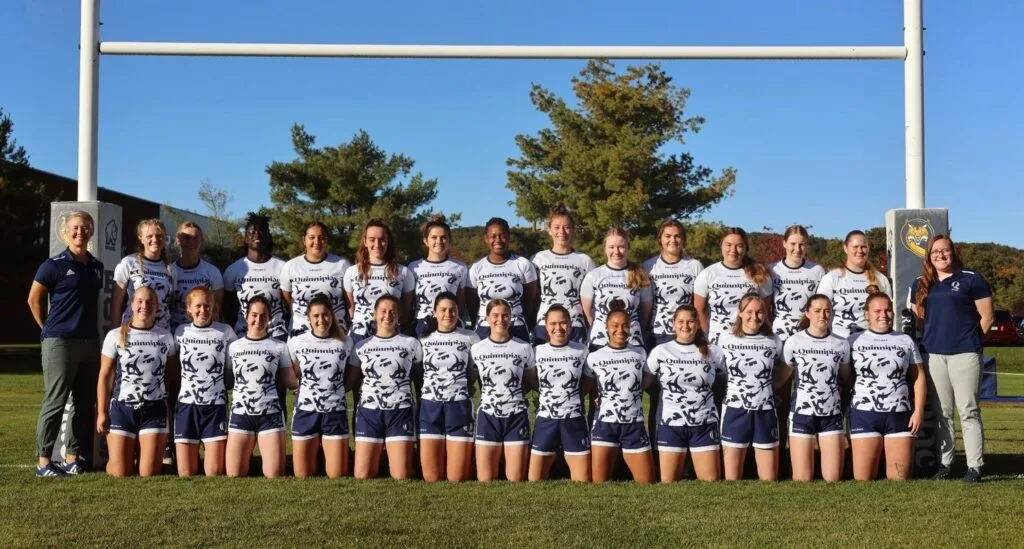
The lawsuit over Quinnipiac’s decision to move women’s rugby from varsity to club status has raised questions that extend far beyond a single campus.
The decision by Quinnipiac University to reclassify women’s rugby from varsity to club status has sparked a legal battle that is drawing attention throughout the rugby community.
The players allege that the move violates Title IX and undermines opportunities for female student-athletes. Quinnipiac, meanwhile, has stated that the changes are part of a broader athletics realignment focused on “long-term competitive sustainability, student-athlete opportunity, financial stewardship, and Title IX compliance.”
Twenty-three current, former, and incoming players have asked a federal court for a temporary restraining order and preliminary injunction that would halt the transition while the lawsuit proceeds.
Quinnipiac Director of Athletics Greg Amodio acknowledged the difficulty of the decision when the university announced the restructuring, stating that such decisions are intended to ensure Quinnipiac Athletics remains equitable, competitive, and sustainable over the long term.
A federal court will ultimately determine the merits of the competing claims.
This article is not an attempt to predict the outcome of the case. Rather, it examines why the dispute has generated significant interest within rugby and why programs around the country may be watching closely.
More Than Just Another Rugby Program
Quinnipiac is not simply another team on the college rugby landscape.
Over the past decade, the Bobcats have established themselves as one of the most successful women’s collegiate rugby programs in the country. The program has won three national championships and has been widely recognized as one of the leading varsity programs in American women’s rugby.
Former Quinnipiac standout Ilona Maher has become one of the most visible figures in the sport, helping introduce rugby to audiences well beyond its traditional fan base.
Mentioning Maher is not a legal argument, nor does it determine the merits of the lawsuit. It does, however, illustrate what sustained institutional investment in women’s rugby can produce. Programs like Quinnipiac help develop athletes, raise the profile of the sport, and create pathways that extend beyond the collegiate level.
That history is one reason this story has resonated so strongly throughout the rugby community.
Understanding the Varsity-to-Club Divide

One of the most important aspects of this story is something many non-rugby observers may not immediately understand: varsity and club sports operate in fundamentally different environments.
Reclassification from varsity to club status is not merely a change in designation.
Varsity programs typically receive support through:
- Coaching staffs and recruiting resources
- Athletic trainers and sports medicine support
- Strength and conditioning programs
- Academic support services
- Dedicated facilities and university-funded travel
- Potential access to athletic scholarships and other institutional resources
Club programs can still be highly competitive and deeply meaningful. Many successful rugby communities have been built through club competition.
However, club teams generally rely more heavily on student leadership, fundraising, volunteer support, and limited institutional resources. The experience can remain rewarding, but it is not the same model.
For athletes who chose a university specifically because it offered varsity rugby, that distinction is significant.
Why Title IX Is at the Center of the Debate
Women’s rugby occupies a unique position in collegiate athletics.
As universities sought to expand opportunities for female student-athletes over the past two decades, rugby emerged as one of several sports that benefited from those efforts. The sport’s growth has often been connected to broader conversations about participation opportunities and gender equity.
That context makes the Quinnipiac case particularly noteworthy.
The university’s women’s rugby program became closely associated with Quinnipiac’s efforts to address Title IX issues that emerged from earlier litigation involving women’s athletic opportunities. Today, the players argue that removing varsity status undermines opportunities Title IX was designed to protect, while Quinnipiac maintains that its restructuring supports its compliance goals.
The legal questions will be decided in court. The broader rugby question is different: what does it mean when one of the country’s most successful women’s rugby programs loses varsity status?
Why Other Programs Are Paying Attention
The significance of this case does not depend on whether it becomes a landmark legal precedent.
What matters is that it has prompted discussion about how universities evaluate athletic opportunities, how emerging sports are supported over time, and how institutions balance financial, competitive, and compliance considerations.
Those are questions that extend well beyond Quinnipiac.
Athletic administrators, coaches, athletes, and advocates for women’s sports are all likely to view this situation through different lenses. Some may see it as a dispute over institutional priorities. Others may see it as a test of how secure women’s rugby opportunities remain once programs become established.
Either way, the conversation has moved beyond a single roster decision.
The Broader Rugby Conversation
For rugby supporters, the stakes are not limited to one team.
Every varsity women’s rugby program represents opportunities for athletes to compete at a high level, develop their skills, and pursue pathways that can lead to national team selection, coaching careers, or continued involvement in the sport.
Programs like Quinnipiac demonstrate what long-term institutional commitment can achieve. They help build visibility, create opportunities, and contribute to the growth of rugby in the United States.
That does not mean every university will reach the same conclusions about athletic sponsorship, nor does it predetermine the outcome of this lawsuit. It does help explain why so many current and former players, coaches, and supporters have followed the story closely.
Looking Ahead
The Quinnipiac case remains an active legal dispute, and many of the underlying facts are still being contested.
What is already clear, however, is that the lawsuit has sparked an important conversation within collegiate rugby.
The issues raised by the case reach beyond a single institution. They touch on questions of opportunity, investment, program stability, and the role women’s rugby occupies within the broader college sports landscape.
Whatever the court ultimately decides, the Quinnipiac case has already forced a discussion that many within rugby believe is worth having. For athletes, coaches, administrators, and supporters of the women’s game, the questions raised by this dispute are unlikely to disappear when the final ruling arrives.
Editor’s Note: This article is analysis and commentary on an ongoing legal dispute. The claims made by the plaintiffs remain allegations, Quinnipiac disputes those claims, and the merits of the case have not been decided by the court.