

Japan Wins Pacific Nations Cup 2026 After Dramatic 20–15 Victory Over Fiji
Japan are Pacific Nations Cup champions for the first time since 2019 after finally getting past Fiji, beating the defending champions 20–15 in a tense final at Prince Chichibu Memorial Stadium in Tokyo.
The Brave Blossoms had been here before.
Fiji beat Japan in the Pacific Nations Cup final in 2024. They did it again in 2025. When the same two teams reached the championship match for a third consecutive year, Japan were trying to end a run that had increasingly become part of the story between them.
This time, Japan finished it.
With the match tied at 15–15 and less than 10 minutes remaining, replacement Samisoni Tua broke through in the left channel for the decisive try. Japan then protected the five-point advantage through the closing minutes to claim their fourth Pacific Nations Cup title and their first since 2019.
It completed an impressive two-week tournament for Eddie Jones’ side, which followed a record 63–14 semifinal victory over the USA with a very different kind of performance against Fiji.
Against the Eagles, Japan overwhelmed its opponent with pace and nine tries. Against Fiji, the Brave Blossoms had to win through possession, pressure, set piece and patience.
And the numbers show just how different this final was.
Watch: Japan vs. Fiji — Pacific Nations Cup Final
Watch the highlights from Japan’s 20–15 victory over Fiji in Tokyo as the Brave Blossoms claimed the 2026 Pacific Nations Cup title.
Video: World Rugby / YouTube
Fiji strikes first, but Japan stays close
Japan opened the scoring through a Sam Greene penalty before Fiji produced the first try.
Virimi Vakatawa powered through the Japanese defence in the 10th minute, with Caleb Muntz converting to put Fiji ahead 7–3.
The first major swing came when Fiji prop Mesake Doge was shown a yellow card in the 18th minute. Japan took advantage almost immediately.
Mamoru Harada finished a forward-driven attack for Japan’s first try, and Greene’s conversion put the hosts back in front 10–7.
Fiji responded before halftime. Captain Tevita Ikanivere crossed following a well-worked lineout attack in the 26th minute, restoring the Flying Fijians’ advantage and sending the defending champions into the break ahead 12–10.
That narrow lead did not tell the entire story.
Japan were increasingly controlling where and how the match was being played.
Japan turns pressure into points
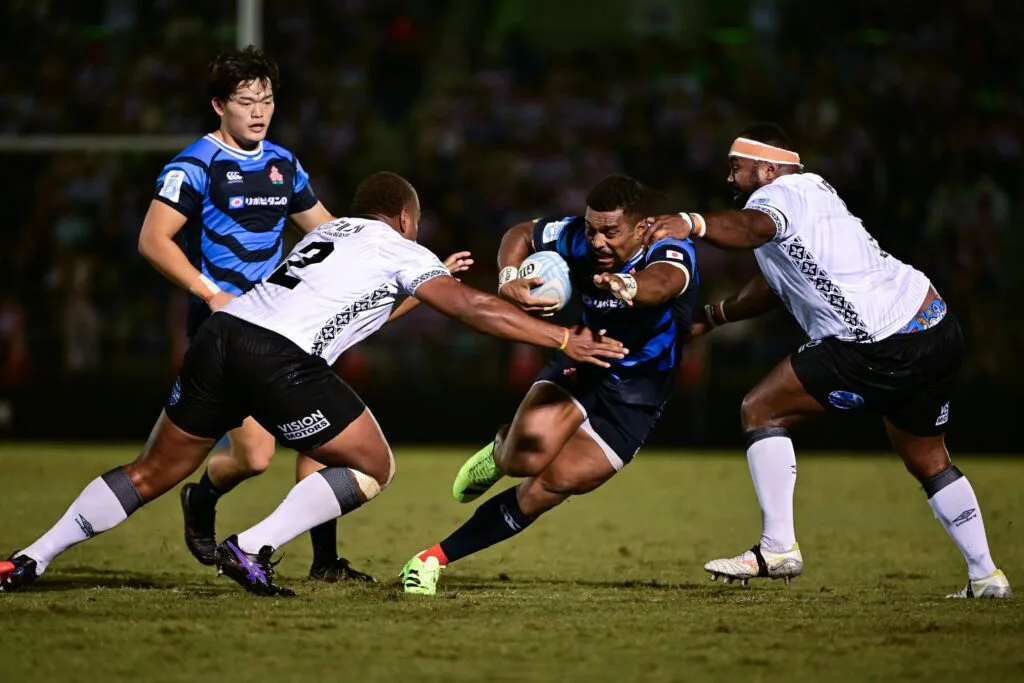
The Brave Blossoms spent long stretches forcing Fiji to defend.
RFC’s match data recorded Japan with 64% possession and 63% territory, along with 121 carries to Fiji’s 55. Japan carried for 360 metres compared with Fiji’s 194 and won 89 rucks to Fiji’s 45.
The pressure became particularly significant at the set piece.
Japan won 13 lineouts at an 87% success rate, while Fiji finished with five lineouts won and a 63% success rate. Both teams maintained 100% scrum success on their own ball, but Japan repeatedly used the scrum and maul to put Fiji under pressure.
Jack Cornelsen said afterwards that Japan believed opponents could overlook the strength of its scrum and maul, and credited the front row with providing an important platform in the final.
Fiji were also forced into an enormous defensive workload.
The Flying Fijians made 151 tackles to Japan’s 86, while Japan ran 152 passes to Fiji’s 72.
Most damaging was the penalty count.
Fiji conceded 14 penalties. Japan conceded five.
That 14–5 difference is also reported by FijiVillage, which identified discipline as one of the central factors in Fiji’s defeat.
Japan didn’t simply have more ball. It repeatedly made Fiji defend, reset and defend again.
Ben Gunter puts Japan ahead
The breakthrough came in the 58th minute.
Replacement scrum-half Shinobu Fujiwara found Ben Gunter close to the line, and the Japan flanker powered over for his team’s second try.
Greene missed the conversion, leaving Japan ahead 15–12.
Gunter’s influence went beyond the five points. He was named Player of the Match as Japan leaned on its forwards and defence in a final that never developed into the open attacking contest either side can produce. World Rugby confirmed Gunter as the official Player of the Match.
Fiji answered.
Isaiah Armstrong-Ravula kicked a penalty in the 65th minute to make it 15–15.
After more than an hour, the third consecutive Pacific Nations Cup final between these teams had effectively become a 15-minute championship decider.
Samisoni Tua delivers the championship moment
Japan found the decisive score.
Fujiwara was involved again before Tua attacked the Fiji defence, stepped through the left channel and crossed in the 72nd minute.
Ryunosuke Ito couldn’t add the conversion.
Japan led 20–15.
There was still time for Fiji, but the Flying Fijians never found the score they needed.
The final 10 minutes underline how effectively Japan closed the match. RugbyPass recorded the Brave Blossoms with 73% possession over the final 10 minutes, leaving Fiji with only 27% as the defending champions tried to find one final opportunity.
Japan held on.
After losing the championship match to Fiji in each of the previous two seasons, the Brave Blossoms were finally Pacific Nations Cup champions.
By the Numbers
The numbers behind Japan’s 2026 Pacific Nations Cup championship victory.
Japan vs. Fiji Match Centre
Explore the full match centre from Japan’s 20–15 Pacific Nations Cup championship victory over Fiji.
Third time finally belongs to Japan
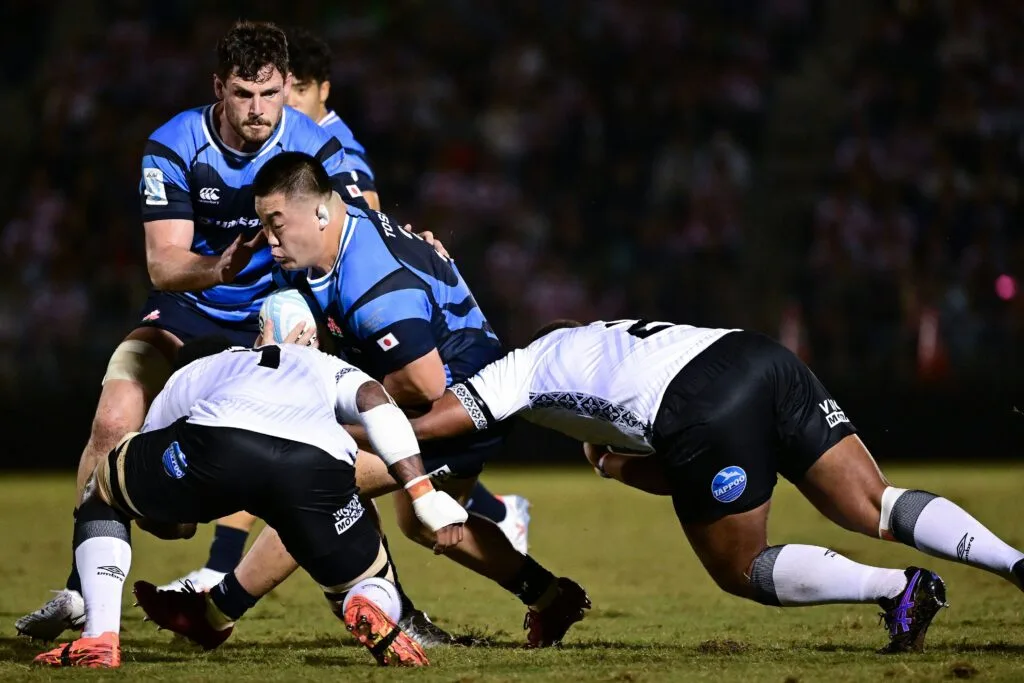
The history made Saturday’s result more significant.
Before the final, Fiji had won 17 of the previous 21 tests between the countries, with Japan winning only four. Fiji had also won the previous three meetings dating back to Japan’s 34–21 victory in the 2019 Pacific Nations Cup.
Most importantly, Fiji had owned the two previous finals.
The Flying Fijians defeated Japan 41–17 in Osaka in 2024 and 33–27 in Salt Lake City in 2025. Saturday was the third consecutive PNC championship meeting between the teams.
Fiji arrived trying to complete a three-peat and extend its record to eight Pacific Nations Cup championships.
Instead, Japan ended the run.
World Rugby’s pre-match calculations also showed what was at stake in the rankings. Japan entered the final 12th on 76.09 ranking points, while Fiji were ninth on 78.00. A Japan victory by 15 points or fewer was projected to move Japan to 77.28 and Fiji to 76.81.
That result is expected to take Japan three places up to No. 9 in the World Rugby Men’s Rankings, with Fiji moving to No. 10 when the rankings are officially updated.
From nine tries to a five-point final
Japan’s route to the trophy also showed two very different sides of the Brave Blossoms.
In the semifinal against the USA, Japan attacked relentlessly.
They scored nine tries in a 63–14 victory, their highest score and biggest winning margin against the Eagles. Japan led 35–14 at halftime and held the USA scoreless throughout the second half. Sam Greene converted all nine tries and finished with 23 points.
World Rugby described the performance as emphatic, with Japan outscoring the Eagles nine tries to two.
Seven days later, that attacking freedom wasn’t available.
Conditions in Tokyo were greasy, the match became heavily focused on set piece, and Japan had to find another way. Jones acknowledged afterwards that his team’s attack never really got moving, instead pointing to defensive intensity and set-piece pressure as important elements of the victory.
That may be one of the more encouraging parts of Japan’s championship.
They didn’t have to win the final the same way they won the semifinal.
Japan completes the job in Tokyo
The 2026 Pacific Nations Cup was a shortened four-team competition, with Japan, Fiji, Canada and the USA playing semifinals in Osaka before the final and third-place match moved to Tokyo. World Rugby said the revised format was part of the changing international calendar around the new Nations Championship and World Rugby Nations Cup.
The four results were:
- Semifinal: Fiji 45–29 Canada
- Semifinal: Japan 63–14 USA
- Third place: Canada 19–16 USA
- Final: Japan 20–15 Fiji
RFC’s Pacific Nations Cup results centre has all four matches and individual match reports.
Canada’s 19–16 victory over the USA secured third place earlier Saturday, with RFC’s full match report covering the Eagles’ narrow defeat in Tokyo.
The championship belonged to Japan.
Three Japanese tries came from Mamoru Harada, Ben Gunter and Samisoni Tua. Fiji answered through Virimi Vakatawa and Tevita Ikanivere, but Japan’s control of possession, superior lineout, lower penalty count and late composure ultimately separated the teams.
For a Japan side that had watched Fiji lift this trophy at its expense in each of the previous two years, the third opportunity finally ended differently.
Japan 20, Fiji 15.
Pacific Nations Cup champions for the first time since 2019.